There is a particular kind of Irish city break that does everything right. The kind where history and hospitality coexist without either overwhelming the other. Where you can walk from a 12th-century castle to a craft brewery in eight minutes. Where the restaurants are genuinely excellent, the pubs are genuinely welcoming and the whole thing is small enough to do properly in a weekend.
Kilkenny is that city. And in 2026, it is better than it has ever been.
Recently voted Top Tourism Town by Fáilte Ireland and home to one of Ireland's most celebrated Michelin-starred restaurants, the Marble City has quietly become one of the most rewarding short breaks in Europe for visitors who want culture, food and authenticity in equal measure.
Day One — Morning: The Medieval Mile
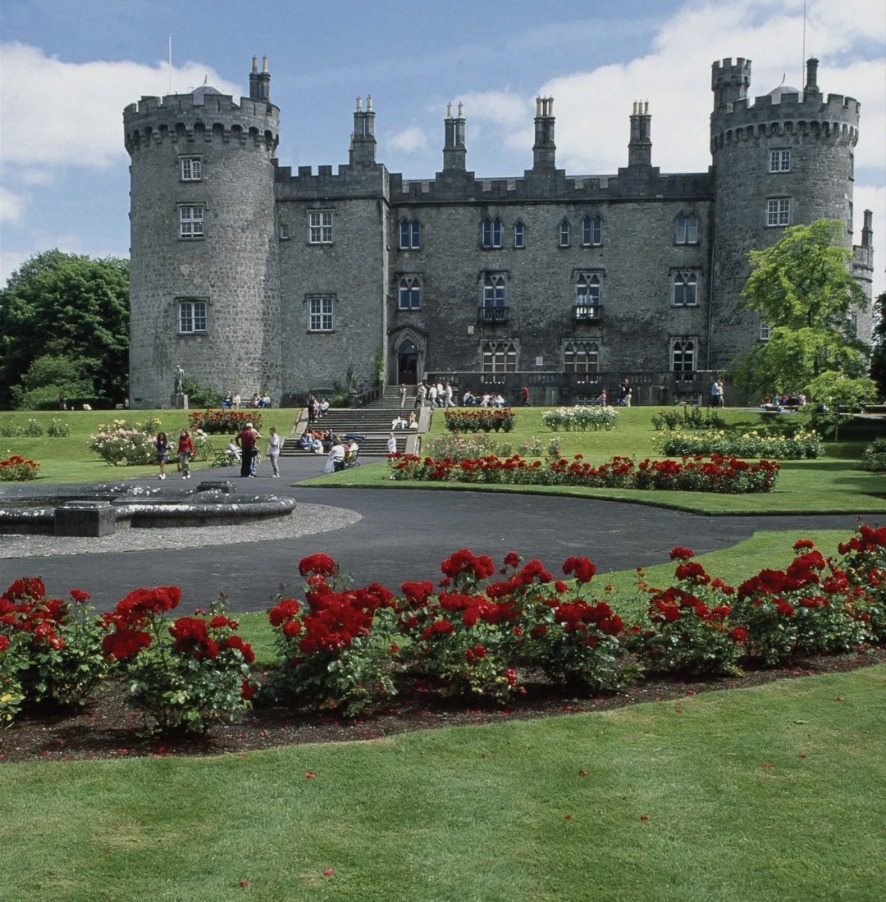
Start at Kilkenny Castle. Built by the Normans in the 12th century and dominating the banks of the River Nore, the castle has been at the centre of Kilkenny's story for over 800 years. The guided tours bring the building's long history to life — from its role as a medieval fortress to its time as the seat of the Butler dynasty, one of the most powerful Anglo-Norman families in Irish history. The parkland surrounding the castle is open and free.
From the castle, follow the Medieval Mile — Kilkenny's celebrated walking route connecting Kilkenny Castle at the south end to St Canice's Cathedral at the north, passing through eight centuries of history. St Canice's Cathedral, built in the 13th century, is one of the finest medieval churches in Ireland. Its round tower — dating from the 9th century — can be climbed for a panoramic view of the city and surrounding countryside.
Day One — Afternoon: History, Craft and the Butter Slip
Find the Butter Slip — a narrow medieval laneway connecting High Street to St Kieran's Street, once used by butter merchants. These days it is lined with independent shops and cafés, but the atmosphere remains unmistakeably historic.
The Medieval Mile Museum on Abbey Street is essential — set inside a restored medieval church, it brings the city's 800-year story to life through tombs, merchant records and interactive exhibits. From there, the Smithwick's Experience on Parliament Street covers the story of Ireland's oldest ale brewery, operating on its Kilkenny site since 1710, ending naturally with a tasting.
Day One — Evening: Where to Eat and Drink
For the definitive Kilkenny dining experience, Lady Helen at Mount Juliet Estate — a Michelin-starred restaurant set within one of Ireland's most beautiful country house estates — represents the pinnacle of what the region produces. The setting alone — candlelit dining rooms in a Georgian country house overlooking the Nore Valley — justifies the journey.
In the city itself, Campagne on Gas House Lane has been a cornerstone of Kilkenny fine dining for years — French-influenced, locally sourced, consistently excellent.
For a genuinely historic pub experience, Kytelers Inn on St Kieran's Street reaches back to the 13th century when its first owner was convicted of witchcraft. Stone walls, stained glass and live traditional music on Friday, Saturday and Sunday nights make it one of the most atmospheric pubs in Ireland.
Day Two — Morning: The River Nore and Rothe House
Begin with a walk along the Canal Walk — a quiet riverside path following the Nore through the outskirts of the city.
Rothe House and Garden on Parliament Street is one of Kilkenny's hidden treasures. A Tudor merchant's townhouse dating from the early 17th century, preserved in remarkable condition, with a garden meticulously restored to reflect a 17th-century layout. The Black Abbey on Abbey Street, founded in 1225 by Dominican friars, is one of the oldest churches in continuous religious use in Ireland.
Day Two — Afternoon: Jerpoint Abbey
No visit to Kilkenny is complete without Jerpoint Abbey, 15 kilometres south near Thomastown. Founded in the 12th century, it is one of the finest and best-preserved Cistercian abbeys in Ireland. The carved cloister arcades — depicting knights, ecclesiastics and mythological figures — are among the most significant examples of medieval stone carving in the country.
Where to Stay
Mount Juliet Estate — the full country house experience on a 1,500-acre estate. From €350 per night. The Pembroke Hotel — four-star on Patrick Street, walking distance from everything. From €150 per night. Lyrath Estate — four-star country hotel with leisure facilities and spa. From €130 per night.
Getting There
115 kilometres from Dublin — approximately 90 minutes by road or just over an hour by train from Heuston Station. Accessible from Cork in under two hours and from Galway in approximately two and a half hours.
Kilkenny does not need superlatives. It lets its streets, its history, its food and its pubs speak for it — and they speak very well.