Blarney Castle & Gardens: Six Hundred Years of Stone, Eloquence and Sixty Acres of Surprise
A 15th-century tower house built by Cormac MacCarthy, a bluestone block in the battlements, and sixty acres of gardens most visitors never expect. Eight kilometres from Cork City, open every day of the year.
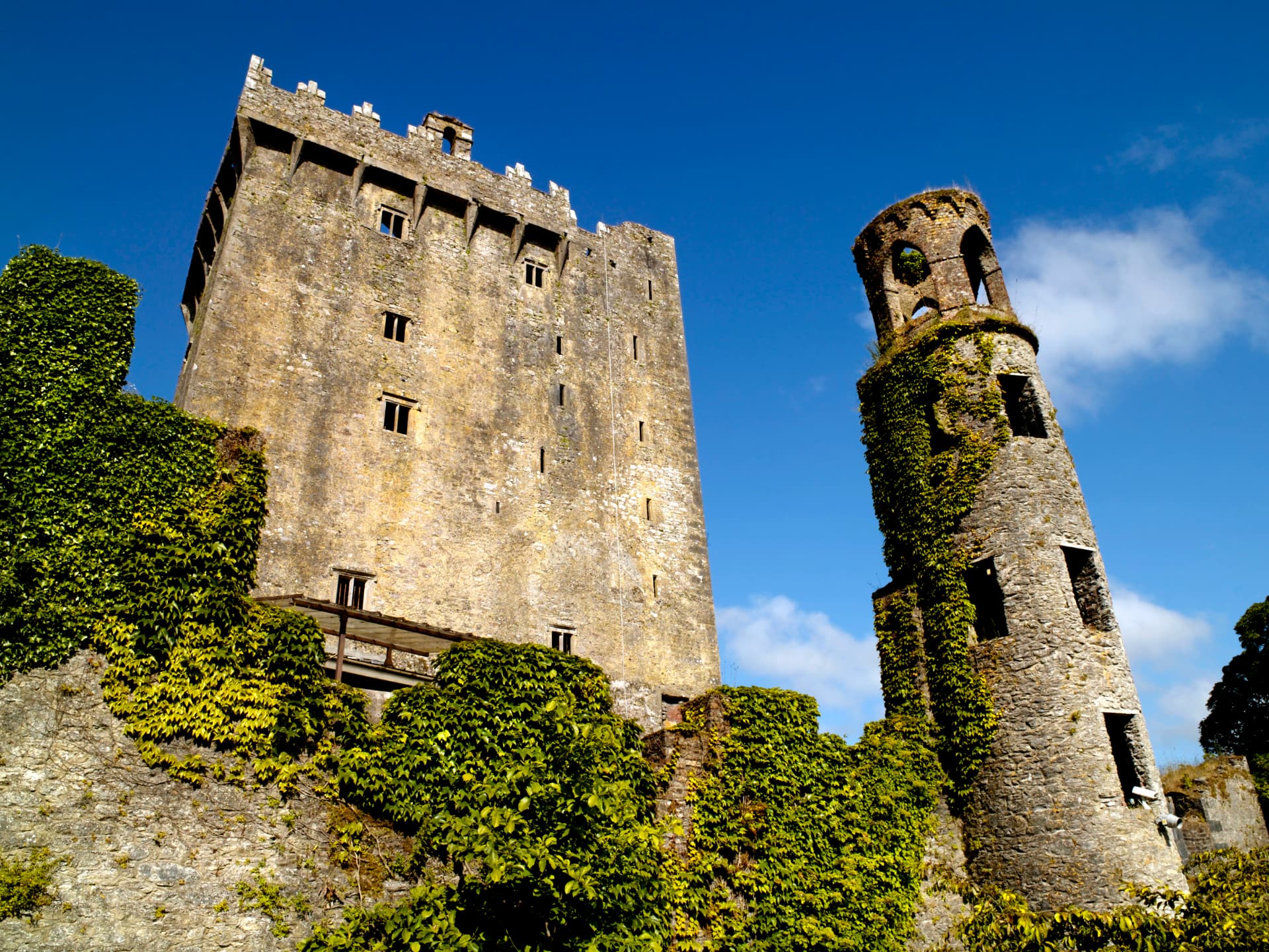
Eight kilometres northwest of Cork City, on a limestone outcrop where the Martin and Blarney rivers meet, stands one of Ireland's most visited landmarks. Blarney Castle has been drawing visitors for hundreds of years — and while most come for the stone at the top of the tower, the sixty acres of gardens around it are what actually fill the day.
The Castle and the MacCarthys
There has been a fortress on this spot since before 1200 — first a timber structure, then a stone castle around 1210. The tower house you climb today is the third castle built here, constructed in 1446 by Cormac Láidir MacCarthy, Lord of Muskerry, one of the most powerful Gaelic chieftains in Munster. It is a classic late medieval tower house: thick limestone walls, a steep and narrow spiral stair, and battlements at the top where the famous stone is set into the machicolations.
The word "blarney" entered the English language as an insult. Queen Elizabeth I, frustrated by a MacCarthy lord whose flattery and endless excuses kept her officials from ever taking his castle, dismissed the whole performance as "blarney" — and the name stuck to the talk, the castle, and eventually the stone.
The Blarney Stone
The famous block of bluestone is set into the battlements at the top of the keep. Kissing it is supposed to confer the "gift of the gab" — the legendary gift of eloquence. There is no separate charge: the stone is included in standard admission. But it is physically demanding. You lean backwards over the parapet, holding an iron rail, while a member of staff supports you. The spiral stairs to reach the top are steep, narrow and uneven, and not for anyone with mobility issues or a fear of heights. Arriving at the 9am opening beats the peak-season queue, which can run an hour or more.
How the stone came by its powers depends on which legend you believe. One says it was a piece of the Stone of Scone, given to Cormac MacCarthy by Robert the Bruce after the Battle of Bannockburn in 1314. Another says a witch, freed by a MacCarthy lord, revealed its power in gratitude. The truth is that nobody knows — and that has never stopped anyone from kissing it.
Sixty Acres of Gardens
The gardens are what most visitors end up praising most. Between the entrance gates and the distant lake lie sixty acres of themed gardens, arboretums, woodland and water features, all included on a single ticket. The Rock Close is a mystical, fern-hung corner of ancient yews, dolmens and stepped paths that feels older than the castle itself. The Poison Garden — a collection of toxic and narcotic plants — is genuinely fascinating, and a favourite with children. The Fern Garden and Ice House, with its tree ferns survivors of the Jurassic period, is "magnificently still and quiet," in the estate's own words.
There is a Carnivorous Courtyard of pitcher plants and Venus flytraps, a Himalayan Valley, a Vietnamese Woodland, a Board Walk and Water Garden of giant gunnera, a Tropical Border, a Herbaceous Border, and an exceptional collection of specimen trees — some the largest of their kind in Ireland, including a foxglove tree and a tree of heaven planted in the 1970s and 1980s, alongside much older limes, cedars and chestnuts. A lake walk runs the full circuit of the estate. The estate recommends at least three hours; a full circuit can fill four to five.
What It Costs and When to Come
The castle and gardens are open year round, every day, starting at 9am. Closing times vary by season: 5pm from January to March and November to December, 5.30pm in April and October, and 6pm from May through September. Last admission is one hour before closing. The site is closed only on 24 and 25 December, with reduced hours (10am to 5pm) on 26 December and 1 January.
Adult admission is €24, students and seniors (65+) €19, children 6 to 16 €12, and children 5 and under free. A family ticket for two adults and two children is €65. You can buy tickets at the gate or online — there are no timed slots. The on-site car park is a flat €2. By public transport, Bus Éireann route 215 runs from Cork city centre to Blarney village. By car it is an eight-kilometre drive, roughly ten to twenty minutes depending on traffic.
The Bottom Line
Blarney Castle earns its fame honestly. The stone is the headline, but the gardens are the reason to stay — and the reason to come back. A €24 ticket buys you a six-hundred-year-old tower house, a backward lean over the battlements, and sixty acres of Poison Gardens, fern glades, giant gunnera and ancient yews that most visitors never expect. Come at 9am, kiss the stone before the queue builds, and then spend the rest of the morning walking the grounds. That is how you do Blarney properly.