Fota Wildlife Park: 100 Acres of Conservation on Cork Harbour
A hundred acres on Fota Island, 430,000 visitors a year, and a charity that puts every surplus back into the animals. The summer of 2026 brought tiger cubs, lion cubs, a giraffe calf, a rhino calf and two red pandas.
On Fota Island, ten kilometres east of Cork City, a hundred-acre strip of parkland has spent forty years quietly doing some of the most serious conservation work in Ireland. Fota Wildlife Park opened to the public in June 1983 and now draws around 430,000 visitors a year — but the headline figure that matters most to the people who work here is the number of endangered animals it helps bring into the world.
It is part of the Zoological Society of Ireland, a registered charity and non-profit, and it reinvests every surplus it makes into capital projects, flood defences, and new habitats. In other words, the price of your ticket goes straight back to the animals.
A Summer of Births: Tigers, Lions, Giraffes and Rhinos
The summer of 2026 was extraordinary even by Fota's standards. Two critically endangered Sumatran tiger cubs were born on 16 June to mother Jambi and father Batak — the first time more than one cub had been born in a single litter at the park. The Sumatran tiger is the most threatened of the tiger subspecies, with fewer than 350 individuals estimated to remain in the wild. Three endangered Asian lion cubs followed on 1 July, the second litter for nine-year-old Arya and ten-year-old Yali.
A critically endangered female Nubian giraffe calf arrived on 15 June, standing at about six feet tall within half an hour of birth. She is a third-generation Fota giraffe — her mother Aoife and grandmother Róisín were both born at the park — and the ninth member of the herd. Fewer than 4,000 Nubian giraffes are estimated to remain in their native habitats in northeast Africa. A male Indian rhino calf followed on 13 July, only the second Indian rhinoceros ever born in Ireland.
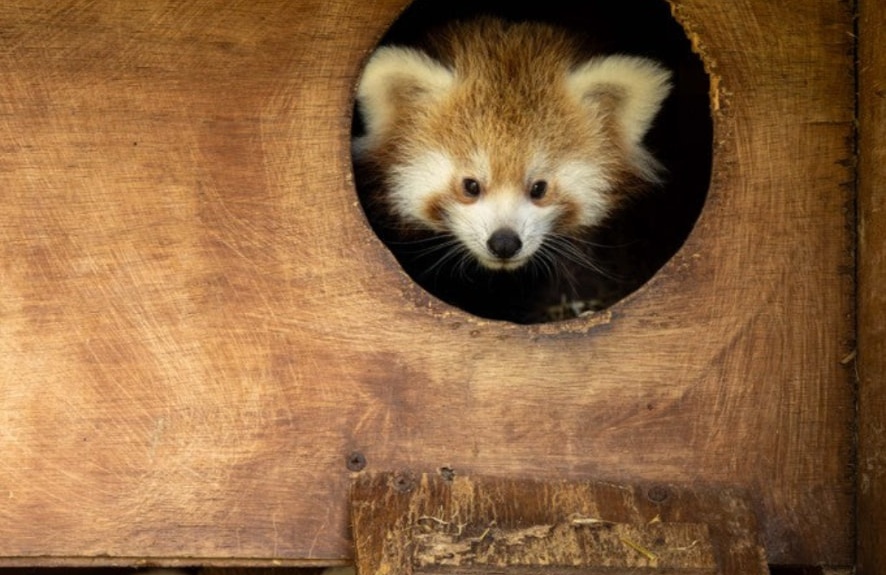
Two endangered red panda cubs, a male and a female, were born on 14 June to mother Laxmi and father Grga, both eight years old. And in a quiet corner of the park, a white-tailed sea eagle chick hatched on 13 April to resident pair Áine and Tony — a species once extinct in Ireland, now red-listed, and bred at Fota as part of a recovery programme the park has been involved in since 1991.
The New Siamang Gibbon Habitat
In September 2026 Fota unveiled a state-of-the-art home for its family of five Siamang gibbons, opened by Kevin "Boxer" Moran, Minister of State with responsibility for the Office of Public Works. The new facility is four times bigger than the old gibbon house and gives the family access to an island habitat. Inside, heated "cuddle walls" let the gibbons choose where to sit and how warm to be; for visitors, sheltered viewing areas and multiple vantage points allow them to watch the gibbons' acrobatic climbing and their distinctive vocal duetting. The Siamang is the largest of the gibbon species and is classified as endangered, threatened by habitat loss across Malaysia, Sumatra and Thailand and by the illegal pet trade.
What a Visit Looks Like
Fota is not a traditional zoo. There are no bars on the cheetah enclosure — they run free across open grassland — and animals roam in spacious, naturally landscaped habitats across the Asian Sanctuary (opened 2015, home to Asian lions, Sumatran tigers and Indian rhino), the Madagascan Village, and the Giraffe viewing area. Most visitors spend two and a half to three hours walking the park, though the Panoramic Wheel, extended for the summer, gives a different perspective on the whole hundred acres.
Daily feeding times are a fixed point of the visit: Humboldt penguins at 10.30am, the famous cheetah run at noon, spider monkeys at 1pm, drill monkeys at 1.30pm, and the giraffe crossing at 3pm. There are three toilet and baby-changing blocks, two cafés — the Oasis and the Drey — and a Serengeti gift shop at the main entrance. You cannot drive, cycle or scooter inside the park; it is walk-only, which is part of what keeps the animals calm.
What It Costs and How to Get There
The park is open daily from 9.30am, closing at 6pm with last entry at 4.30pm (5pm for annual pass holders). It closes only on Christmas Eve, Christmas Day and St Stephen's Day. At the gate, adult tickets are €22.50, under-16s €15.60, students and over-65s €16.50, and children under three go free. Family tickets run from €65.50 for two adults and two children up to €81 for two adults and four. Buying online saves around €2 per person — €20.20 adults, €14.00 children, €15.00 students and seniors — and lets you skip the queue.
Car parking is €3 per visit, charged separately and run by Fota House and Gardens; the fee also covers access to the Fota House grounds, frame yard garden, walled gardens and arboretum. The smartest way to arrive is by train: Fota has its own station on the Irish Rail Cork–Cobh line, and the park entrance is a short walk from the platform. By car it is ten kilometres east of Cork City, signposted off the N25.
The Bottom Line
Fota Wildlife Park earns its place among Ireland's most visited attractions not by being the biggest or the flashiest, but by being honest about what a wildlife park is for. Every birth here — a tiger cub, a giraffe calf, a sea eagle chick — is a small, measured step back from the edge of extinction for a species that has nowhere else to go. A family ticket, a three-hour walk, and a €3 parking charge that also buys you the gardens next door is genuinely good value, and the money goes back to the animals. If you are anywhere near Cork Harbour, go. Bring walking shoes, arrive before noon, and stay for the cheetah run.