The Guinness Storehouse: Ireland's Most Visited Attraction — and Why It Earns That Title Every Single Day
Seven floors of brewing history, advertising genius and Irish craft inside a 1904 fermentation plant at St James's Gate — crowned by a pint with a 360-degree view of Dublin from 46 metres up. Here is what the experience actually delivers.
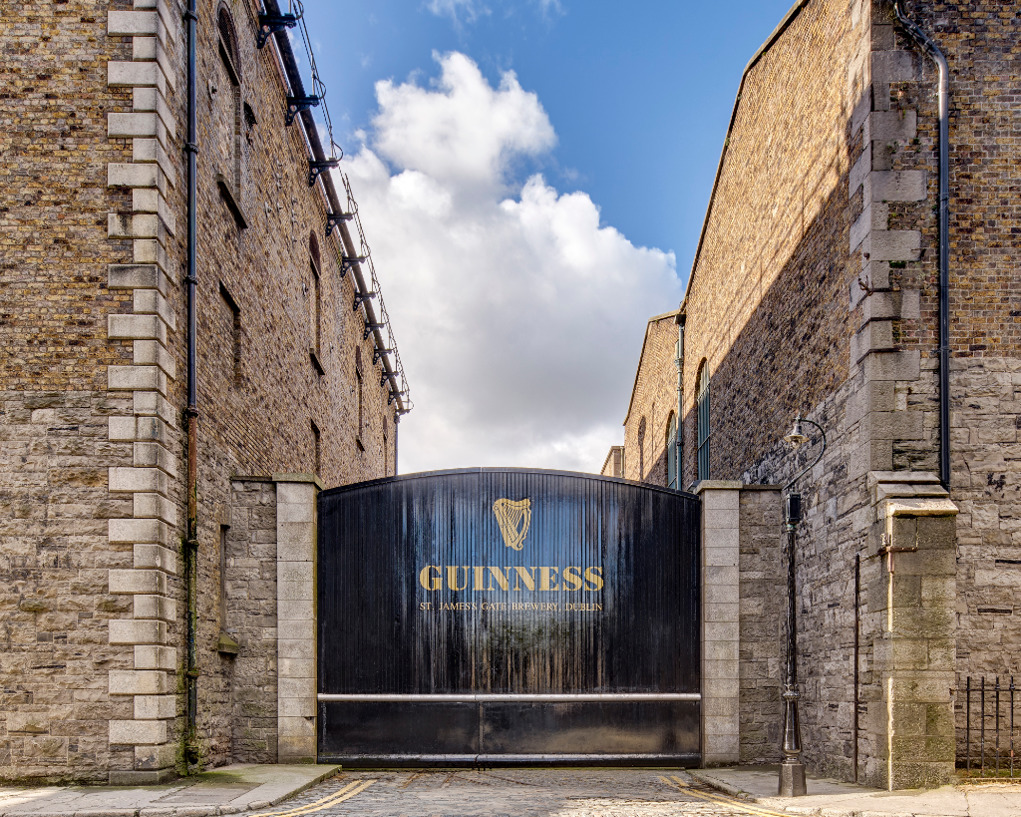
Ireland's most visited paid attraction is not a clifftop or a castle ruin. It is a brewery. More specifically, it is a seven-storey former fermentation plant in the Liberties district of Dublin that has drawn 25 million visitors through its gates since it opened in 2000 — and shows no sign of slowing down.
The Guinness Storehouse welcomed 1.65 million visitors in 2024 alone, a 10% increase on the previous year, drawing people from over 150 countries. It has held the title of Ireland's most visited attraction for fifteen consecutive years, since overtaking Dublin Zoo in 2010. In a country that runs on scenery and heritage, the fact that a branded visitor experience tops the charts is worth understanding — because what the Storehouse actually delivers is considerably more substantial than the phrase "brand experience" might suggest.
The 9,000-Year Lease
The story begins with a lease. On 31 December 1759, a 34-year-old brewer from Celbridge, County Kildare, named Arthur Guinness signed a 9,000-year lease on a disused brewery at St James's Gate, Dublin, for an annual rent of £45. The site covered four acres and consisted of a mill, two malthouses, stabling for twelve horses and a loft to hold 200 tons of hay. The lease — which would not expire until the year 10759 — is displayed in the Guinness Archive and remains one of the most extraordinary commercial documents in Irish business history.
Arthur Guinness had learned to brew from his father, Richard, who was land steward to the Archbishop of Cashel and supervised the brewing of beer for workers on the estate. Arthur used a £100 bequest from the archbishop to start a small brewery in Leixlip with his brother before setting his sights on Dublin. He began at St James's Gate by brewing ale, but in the 1770s he turned to a new type of English beer called porter — a dark, roasted brew that was gaining popularity in London. The porter was so successful that in 1799 Arthur brewed his last ale and concentrated solely on the black stuff. The decision defined the company's future for the next 267 years.
The first known export of Guinness left Dublin port in 1796, bound for England. By 1801, the brewery was producing West India Porter — a stronger blend designed to withstand long sea voyages to colonial markets. By 1833, St James's Gate had surpassed Beamish in Cork to become Ireland's largest brewery. By 1886, it was the biggest brewery in the world, producing 1.2 million barrels annually. At its peak, the workforce exceeded 3,200 people, with an estimated 10,000 directly dependent on the brewery for their livelihood — roughly one in thirty of Dublin's population at the time.
The Building
The Storehouse building itself is a piece of industrial architecture worth attention. Constructed between 1902 and 1904 as a fermentation plant for the brewery, it was inspired by the Chicago School of Architecture and was one of the first steel-framed structures built in Ireland. The building served its original brewing function until 1988, when it was decommissioned as a working fermentation plant. The transformation into a visitor experience began in 1997, and the Storehouse opened to the public on 1 January 2000.
The interior is organised across seven floors, shaped like a giant pint glass — a deliberate architectural metaphor that becomes visible the moment you step inside the central atrium and look up. If the building were actually filled with Guinness, it would hold 2.6 million pints. The experience is self-guided, allowing visitors to move through each floor at their own pace, and the average visit runs to about 90 minutes — though most people stay longer.
A Floor-by-Floor Walkthrough
The ground floor introduces the ingredients — water from the Wicklow Mountains, roasted Irish barley, hops and yeast — and the brewing process that turns them into stout. The exhibits are genuinely informative rather than decorative; you leave understanding the difference between roasting barley for flavour and roasting it for colour, and why the nitrogenated pour creates the creamy head that distinguishes a Guinness from any other stout.
Upper floors cover the history of transport and cooperage — the craft of the coopers who built the wooden barrels that carried Guinness worldwide, a trade that survived at St James's Gate until the last wooden keg was racked in 1963. The advertising floor is a genuine highlight: a trove of historic campaigns from the legendary toucans to the award-winning television commercials, including artwork by John Gilroy, whose illustrations defined the brand's visual identity for decades. The Guinness Archive, which preserves the brand's history from 1759 to the present day, has partnered with Ancestry to digitise over 1.6 million historical records capturing the people of Guinness — a resource that connects the brewery's workforce to living descendants.
The Tasting Room offers a sensory experience: a small, darkened space where visitors sample Guinness in a way designed to focus attention entirely on the taste, aroma and texture of the liquid. It is a brief encounter but an effective one — even for people who arrive convinced they do not like stout.
The Gravity Bar
The experience culminates on the seventh floor at the Gravity Bar — a glass-and-steel structure perched atop the Storehouse, designed to look like the head of a pint glass. It sits 46 metres above the Dublin streets and offers a 360-degree view that, on a clear day, stretches from the Dublin Mountains to the south to Howth Head to the north, with the city spread in between. The bar was expanded at a cost of €20 million over 16 months and was doubled in size in 2020, allowing it to hold up to 500 people at a time.
Your ticket includes a complimentary pint of Guinness — or Guinness 0.0, the alcohol-free version — and the experience of drinking it at that height, with that view, is the moment most visitors remember. Over the Storehouse's 25-year history, the Gravity Bar has witnessed 12 marriage proposals (all of which received a yes) and welcomed its oldest recorded visitor at 98 years of age. In 2025 alone, the venue served over 1.5 million pints of Guinness and Guinness 0.0, and the Guinness Academy certified over 102,000 new pint-pouring experts in the art of the legendary six-step pour.
Tickets and Practicalities
The standard Guinness Storehouse Experience costs from €24 per person and includes the self-guided tour through all seven floors and a pint at the Gravity Bar. The Guinness Academy add-on — from €36 — teaches you the six-step pouring ritual and certifies you with a certificate. The STOUTie experience — from €32 — prints your selfie on the head of your pint. The fully guided Home of Guinness Experience, from €48, is a guided journey through all seven floors, offered Monday to Friday and strictly over-18s.
The Storehouse is open seven days a year-round. Tickets are best booked online in advance — the attraction is genuinely popular and peak-time queues are real. Early morning or late afternoon slots offer the quietest experience. The site is at St James's Gate, Dublin 8 (eircode D08 VF8H), a fifteen-minute walk from Christ Church Cathedral through the Liberties, one of Dublin's oldest and most rapidly evolving neighbourhoods. Allow a minimum of 90 minutes for the self-guided tour; most visitors spend two to three hours. The building is fully accessible, with lifts to every floor.
The wider St James's Gate site remains a working brewery — one of the largest in Europe — and the Storehouse is set within its gates. For visitors who want to go further, the Guinness Open Gate Brewery, a four-minute walk away, offers a tasting paddle of limited-edition experimental brews in a working craft brewery. The combined ticket, from €41, pairs both experiences.
Pairing It With Dublin
The Storehouse sits in the Liberties, a district that has transformed over the past decade into one of Dublin's most interesting areas for food, drink and independent retail. The Dublin Whiskey Distillery on Mill Street, the Teeling Whiskey Distillery on Newmarket Square and the growing cluster of specialty coffee bars and small restaurants along Thomas Street and Francis Street mean that a morning at the Storehouse can extend naturally into an afternoon spent exploring a part of Dublin that most first-time visitors miss entirely.
Walk east along the Liffey and you reach Christ Church Cathedral and Dublinia within twenty minutes. Trinity College and the Book of Kells are another ten minutes beyond that. The Storehouse works as a standalone half-day, but it also works as the western anchor of a walking route through the heart of the city — and it is a considerably better starting point than most guidebooks suggest.
The Bottom Line
The Guinness Storehouse earns its position at the top of Ireland's visitor attractions because it does something that few branded experiences manage: it takes a genuinely extraordinary story — a 265-year-old brewery that became the largest in the world, built on a 9,000-year lease signed by a man from Kildare — and presents it with the production values, depth and warmth that the subject deserves. The Gravity Bar alone is worth the price of admission. But it is the floors beneath it — the history, the craft, the advertising genius and the connection between a single Dublin brewery and the wider story of Irish industry and culture — that make the Storehouse the most complete visitor experience in the city. Go early, stay long, and walk the Liberties when you come back down.