The Ring of Hook, County Wexford: Lighthouses, Norman Castles and the Oldest in the World
A narrow finger of limestone and farmland reaching into the Celtic Sea — with an 800-year-old working lighthouse at its tip, Cistercian ruins, a medieval harbour castle and a famine ship.
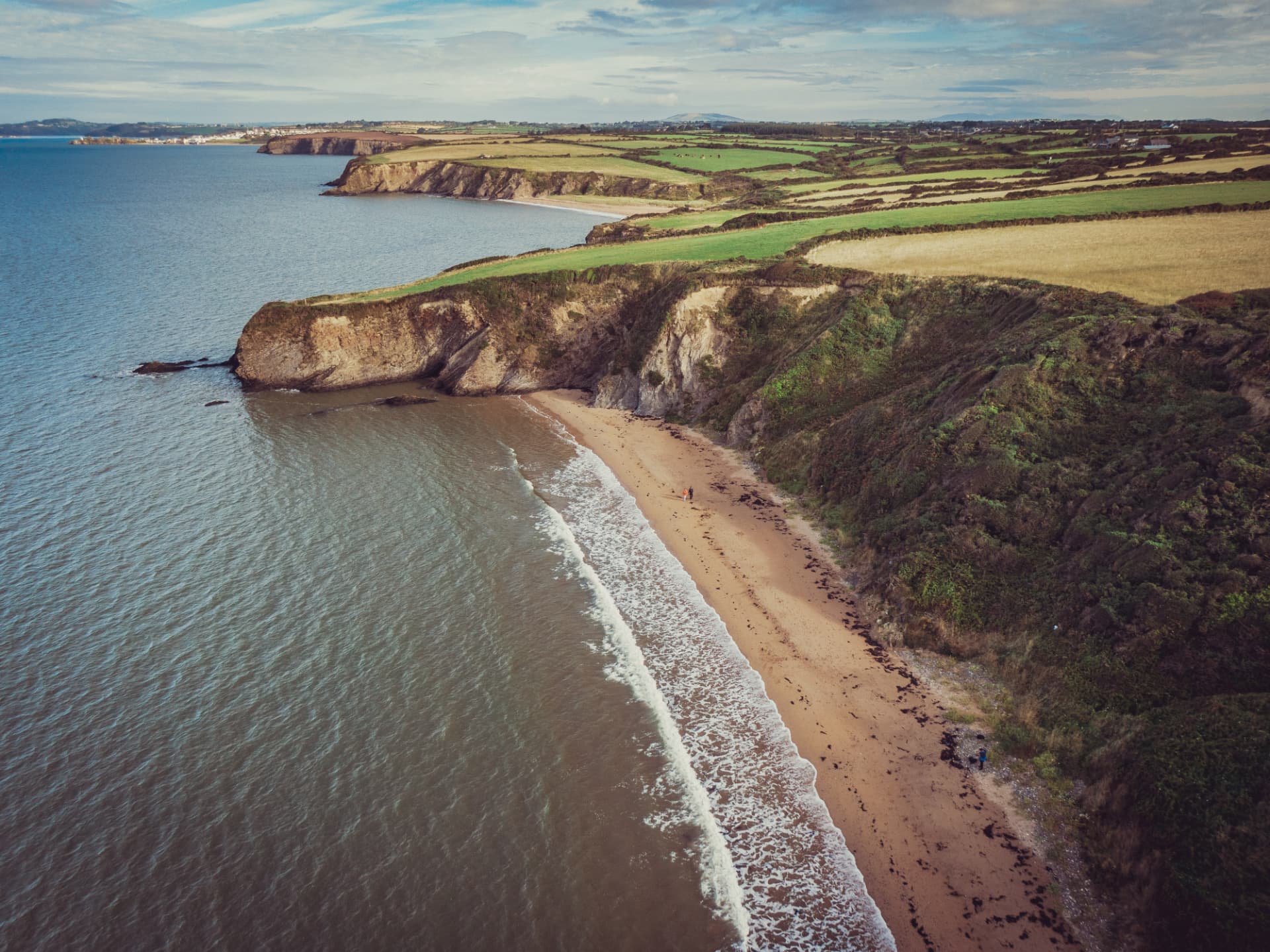
A Peninsula That Punches Far Above Its Visitor Numbers
The Hook Peninsula extends southward from County Wexford into the Celtic Sea — a narrow finger of limestone and farmland bordered on the west by the wide mouth of Waterford Harbour and on the east by the Celtic Sea itself. It is not on the Wild Atlantic Way. It is not the subject of major tourism campaigns. Most visitors to the sunny southeast of Ireland pass through Wexford town or head for the Copper Coast in Waterford without turning south at New Ross toward a peninsula that most guidebooks give a paragraph where it deserves a chapter.
At the tip of the Hook Peninsula stands Hook Lighthouse — which its operators describe as one of the oldest operational lighthouses in the world. The tower has been guiding ships into Waterford Harbour for over 800 years, and local tradition links the headland to monks who kept a warning beacon here as far back as the 5th century. Guided tours take visitors into the working light and up to the lantern room, with views across the harbour mouth, the Waterford estuary and the Celtic Sea. The lighthouse is also the origin of one of the most used — if least understood — phrases in the English language: "by Hook or by Crooke" — a reference to the two routes by which Cromwellian forces planned to take Waterford in 1649, either via the Hook Peninsula or via the village of Crooke on the opposite shore.
Dunbrody Abbey and the Famine Ship
Near Campile at the head of the peninsula, Dunbrody Abbey stands in a field with the calm of a place that has been there since the late 12th century, when it was settled by Cistercian monks from St Mary's Abbey in Dublin. The ruins are among the most complete of any Cistercian abbey in the country, with the nave, choir and transepts still standing — a spatial experience that needs no interpretation to be impressive. The site is rarely crowded, and the combination of monastic ruins, farmland and the nearby Dunbrody Famine Ship makes the area around New Ross one of the more historically dense corners of Wexford.
The Dunbrody Famine Ship Experience in New Ross is a full-scale reconstruction of the original barque that carried emigrants to North America in the famine years, using actor guides in period costume to recreate life on board for the passengers who made the crossing. New Ross was a key departure port because of its position at the head of tidal navigation on the Barrow, and the reconstruction makes those conditions real in a way a conventional museum display rarely achieves. President John F. Kennedy's great-grandfather emigrated from nearby Dunganstown, and the Kennedy Homestead there adds an extra layer of interest for visitors from the United States.
Fethard-on-Sea and the Coastline
On the eastern coast of the Hook Peninsula, the village of Fethard-on-Sea sits above a sheltered bay with a working pier, a small beach and a collection of painted houses that give it the character of a place tourism has barely altered. The eastern coast faces the Celtic Sea and catches the southerly light that makes this corner of Ireland distinctive — and the drive along it in late September, with harvest fields running down to the cliff edge and the sea bright below, is one of those Irish driving experiences that is difficult to plan for and impossible to manufacture.
Slade Castle, at the southern end of the peninsula near Hook Head, is a 15th-century tower house that has survived in unusually good condition, standing above a small harbour that was busy in medieval times and is still used in a modest way today. The castle is not formally open to the public, but it can be viewed from the road and the harbour, and its combination of tower house and harbour setting is the kind of historical composition that rewards the visitor who finds it without a tour bus.
How to Do the Ring of Hook
The Ring of Hook is a signed driving route that loops around the peninsula, visiting its main sites in a logical circuit. It works as a day trip from Waterford city or Wexford town, and passes through the villages of Duncannon, Ballyhack, Arthurstown and Fethard-on-Sea before arriving at Hook Lighthouse at the tip. Allow at least four hours for a comfortable circuit with stops. The Passage East car ferry — a short crossing from Ballyhack to Passage East on the Waterford side — lets you combine the Ring of Hook with the Copper Coast Drive in a single circular day covering two of the southeast's most rewarding coastal landscapes.
The Bottom Line
The Ring of Hook is one of the most rewarding drives in the southeast of Ireland — a finger of limestone and farmland with one of the world's oldest operational lighthouses at its tip, flanked by Cistercian abbey ruins, a medieval harbour castle, famine heritage and the particular light of the Wexford shore. That it remains off the mainstream tourist circuit makes every visit better, and makes the phrase "by Hook or by Crooke" a more useful piece of navigational advice than Cromwell ever intended.