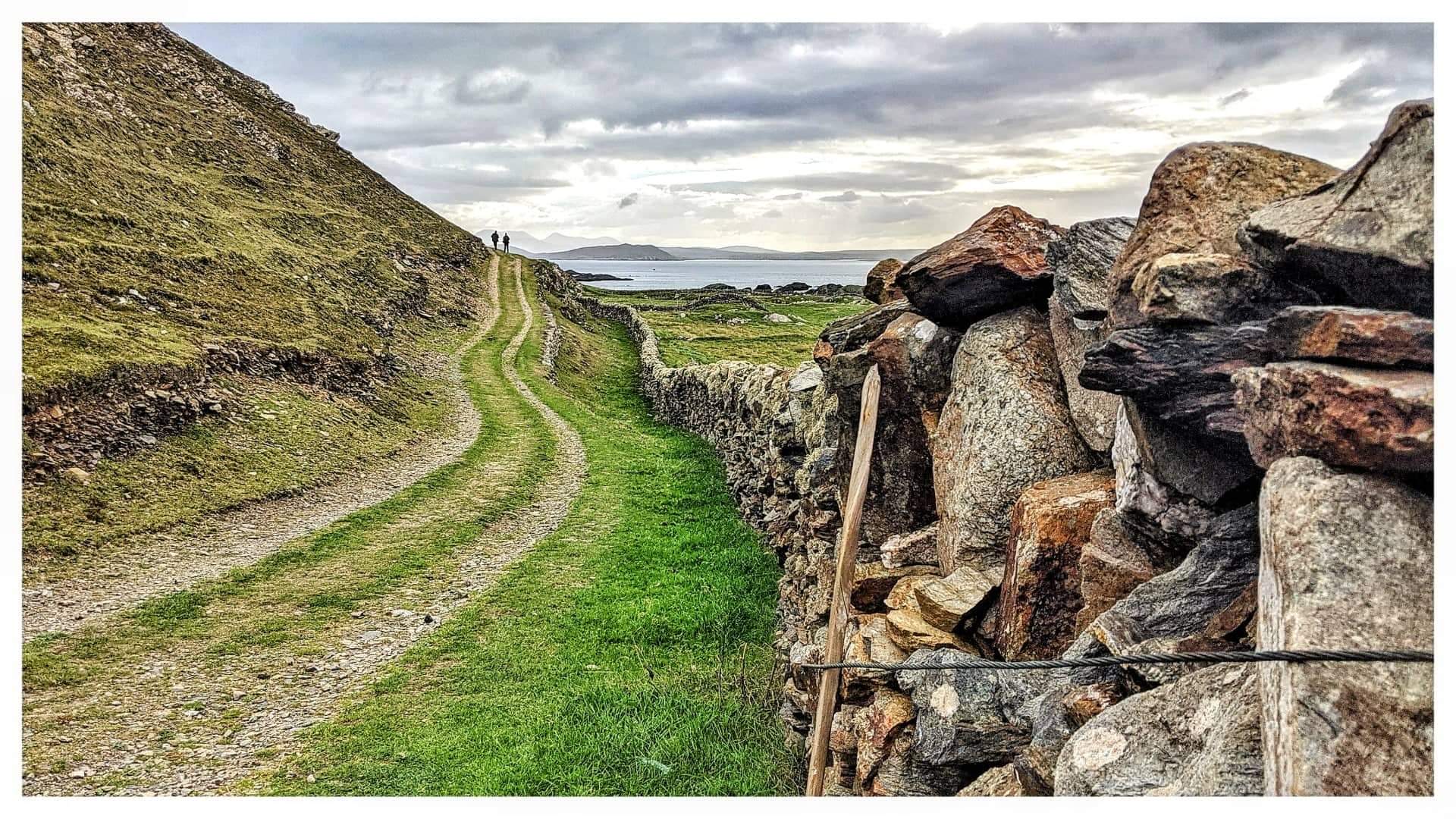
Nine Miles Off the Connemara Coast
The ferry to Inishbofin departs from Cleggan Pier in County Galway, a small working harbour village approximately 12 kilometres north of Clifden, and the crossing takes between 30 and 45 minutes depending on conditions. Nine miles of Atlantic water separate the pier from Inishbofin — enough distance to make the journey feel like a genuine departure, a crossing from one world into another — and the island that appears as the ferry rounds the eastern headland is, in most significant respects, exactly the kind of place that the crossing suggests. Quieter. Slower. More completely itself.
Inishbofin has been inhabited for at least 1,500 years. Saint Colman of Lindisfarne established a monastery here in 665 AD, following his departure from Northumbria after the Synod of Whitby. The island's sheltered harbour made it a significant strategic location through the medieval period, and the ruins of Grace O'Malley's castle, dating to the 16th century, stand at the harbour entrance as a reminder that Inishbofin was once within the maritime territory of one of history's more forceful personalities. The island later served as a prison for priests during the Cromwellian period — a Star Fort built by Cromwell's forces in the 1650s is still substantially intact on a promontory above the harbour.
What Makes Inishbofin Different
This tranquil island is a haven of wildflowers, stone walls and crystal-clear waters. The island has a real "old Ireland" feel to it, with warm hospitality, traditional music, and a chance to completely unplug. Those observations from recent visitors capture something real about the character of a place that has managed to absorb tourism without being altered by it — still fundamentally itself, still operating on island time, still offering the kind of quiet and space that has become harder to find on the mainland.
The island's permanent population numbers approximately 160 people, a figure that has been relatively stable in recent years following the decline from a peak of several hundred in the 19th century. Tourism — primarily from visitors seeking exactly the kind of unhurried, landscape-connected, music-filled experience that Inishbofin provides — has become a central part of the island economy, supplementing the fishing and farming that have always sustained the community. The island supports three pubs, two hotels, a number of self-catering cottages and a campsite, alongside the Inishbofin Heritage Museum, which documents the island's natural and human history with the specificity that only a community museum operated by people who are themselves part of that history can achieve.
The Walking and the Wildlife
Inishbofin is approximately five kilometres long and three kilometres wide — large enough to spend a full day walking without retracing your steps, small enough to understand as a complete place rather than a series of disconnected landscapes. The walking routes cross farmland, follow clifftops, pass the ruins of the Cromwellian star fort and descend to sheltered beaches where the water, on calm days, is clear enough to see the sand bottom at four or five metres depth.
The island's wildlife reflects its Atlantic position and the relatively low agricultural intensity of its land use. Corncrakes — the rasping migratory birds whose call was once a feature of Irish summer nights across the whole country but which have declined catastrophically on the mainland — are still heard on Inishbofin during the summer months. Choughs, the red-billed crow associated with Atlantic cliff environments, are resident. Grey seals haul out on the rocks at the island's western end. The inshore waters around the island are a reliable location for cetacean sightings, with common dolphins, minke whales and the occasional bottlenose dolphin all recorded regularly from the ferry and from the island's cliff walks.
The Evening: Music and Atmosphere
The social life of Inishbofin concentrates in its pubs in the evenings — particularly in the months from June to September when the visitor population swells and the island's musicians, supplemented by visitors who have brought instruments, produce the kind of informal traditional music sessions that are genuinely unrepeatable. The Doonmore Hotel, which overlooks the harbour, and Day's Bar, the older and more architecturally traditional of the island's pubs, are the primary venues for evening music, and the combination of a pint, a fire (the Atlantic evenings cool quickly even in midsummer), and a session that has assembled itself organically from whoever happens to be on the island that evening is about as close as the current era gets to the traditional Irish pub experience in its purest form.
Getting There and Practical Notes
Island Discovery operates ferries to Inishbofin from Cleggan Pier. The journey takes approximately 30 to 45 minutes. Ferries run daily through the summer season, with a reduced winter service. Booking in advance is recommended in July and August, both for the ferry and for accommodation, as the island's bed capacity is finite and the combination of island character and Atlantic summer draws visitors who have very specific ideas about what a holiday should feel like. Bicycles can be hired on the island for exploring beyond walking range of the harbour.
The Bottom Line
Inishbofin is the kind of island that people plan to visit for two nights and leave after four days, having found that they keep finding reasons to stay. Its combination of history, wildlife, traditional music, walking and genuine island atmosphere makes it one of the most completely satisfying off-the-mainland experiences available anywhere on the Irish west coast — and its relative obscurity compared to the Aran Islands means it continues to deliver the unhurried, unmediated encounter with Atlantic island life that more heavily visited islands can no longer quite provide.