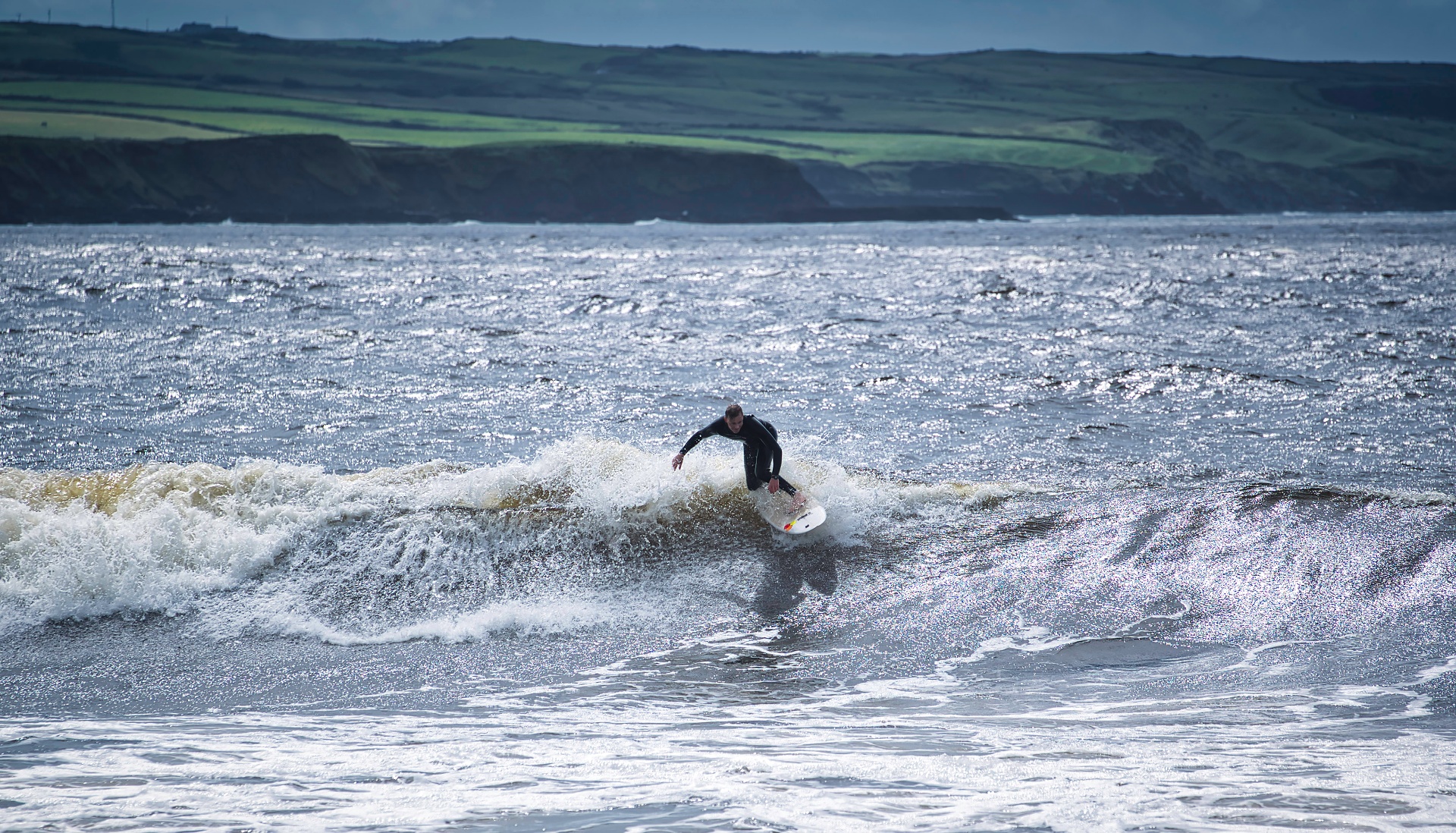
Why Ireland Is a Serious Surf Nation
Ireland's west coast faces the full, unobstructed fetch of the North Atlantic — thousands of miles of open ocean between the western seaboard and the coast of Newfoundland, with nothing to interrupt the swell energy that builds in the storm systems spinning off the Labrador Current each autumn and winter. That geography, combined with a deeply indented coastline of headlands, bays, reefs and beaches that creates almost every type of wave imaginable, has made Ireland one of Europe's most respected surf destinations. Beach breaks for beginners, slab waves for big wave professionals, hidden reef breaks with nobody else out — it is all here, and it has been drawing surfers from across Ireland, Britain and the European continent for decades.
At the centre of that story sit two towns. Lahinch in County Clare and Bundoran in County Donegal are not just the places where most Irish people first learned to surf — they are the places that gave Irish surfing its identity, its culture, and its institutions. They are different in character, different in what they offer, and separated by the better part of three hundred kilometres of coastline. Both are essential.
Lahinch: Where Ireland Learned to Surf
Lahinch sits on the west Clare coast, sheltered in Liscannor Bay with the Cliffs of Moher rising just a few kilometres to the north. It is often described as Ireland's equivalent of St Andrews in golf — a comparison that speaks not just to the quality of the break but to the sense of tradition, of accumulated surf culture, that permeates the town. Lahinch has been a surf destination since the 1960s, when the first surfers discovered that the bay's orientation, facing west and northwest into the prevailing Atlantic swell, produced consistent, readable waves across all tide stages on most swells above a metre.
The main break at Lahinch Beach is a sandy beach break that runs along the length of the bay, producing waves that suit beginners and intermediates across a wide range of conditions. When the swell picks up significantly, Lahinch shows a different face: the reefs and corners around the bay produce more powerful, hollow waves that keep experienced surfers more than satisfied. Just south of Lahinch, Riley's Wave — a powerful, barreling reef break — provides an advanced option without having to travel far. Off the Cliffs of Moher themselves, accessible only by boat, Aileens is one of the most talked-about big wave breaks in Europe, a slab wave that can reach 35 to 40 feet in the right winter conditions.
The surf school infrastructure in Lahinch is well established. Ben's Surf Clinic, which has been on the promenade for 14 years and was the first hardboard surf school in Ireland, is one of the most respected operations in the country. Lahinch Surf Experience and the Lahinch Surf School both operate on the beach, running two-hour lessons with 90 minutes in the water, all equipment provided and instruction from ISA-certified coaches. Surf camps run Monday to Friday every week through summer until September.
Away from the beach, Lahinch's surf culture has shaped the town in ways that are visible in every corner — the promenade's surf shops, the boards stacked in the back of every third car in the car park, the easy, unhurried rhythm of a town that has long since organised its day around the tides. Off the water, the post-surf ritual is important and non-negotiable: a pub with a turf fire, somewhere warm to sit and review the waves of the day over something hot or amber-coloured.
Bundoran: The Heartbeat of Irish Surfing
Three hundred kilometres to the north, Bundoran in County Donegal is generally described as the surf capital of Ireland — a designation grounded in the quality and variety of its breaks. The town's primary break is The Peak, a reef wave that fires in the middle of the town itself, visible from the main street and working on virtually any swell above two feet, producing A-frame peaks with hollow rights and fast lefts that have been drawing experienced surfers for decades and hosting international competitions. Tullan Strand, a long beach break extending to the north of town, offers the counterpoint: five kilometres of sand ranging from forgiving beginner waves in summer to pounding, powerful conditions during winter storms.
Bundoran's surf infrastructure is well-developed, with multiple surf schools including Bundoran Surf Co., one of Ireland's most established operations, offering lessons for all levels. Evenings in Bundoran follow a predictable and deeply satisfying pattern: the pubs are lively, the surf talk is constant, and the Atlantic light dies slowly over the water through the long summer evenings.
When to Go, What to Wear and What to Know
Irish water temperatures range from around 8 to 10 degrees Celsius in winter to 14 to 16 degrees in summer. A 5/4 millimetre wetsuit with boots, gloves and a hood is standard for winter surfing. In summer, a 4/3 millimetre suit suffices for most people. All surf schools provide wetsuits and boards as part of their lesson packages. The best season for beginners is late spring through early autumn. Autumn is when Irish surfing reaches its peak for more experienced surfers — September and October deliver solid Atlantic swells, relatively warm water from summer, and noticeably fewer people in the water.
The Bottom Line: Lahinch and Bundoran between them define what Irish surfing is: Lahinch the gentle, tradition-rich town where generations of Irish people took their first wave; Bundoran the uncompromising surf capital that delivers real waves to real surfers in a genuinely beautiful Atlantic setting. Between them, they cover every level from first-timer to professional, and between the water and the pubs that follow it, they offer an experience of the Irish west coast that no amount of driving past will replicate.