Powerscourt Estate and Gardens: 47 Acres of Wicklow, a Palladian House, and Ireland's Highest Waterfall Down the Road
A 13th-century castle rebuilt as a Palladian mansion, gardens voted among the finest in the world, a 121-metre waterfall six kilometres away, and a half-day from Dublin that is worth doing properly. Here is what is actually at Powerscourt — and how long each part takes.
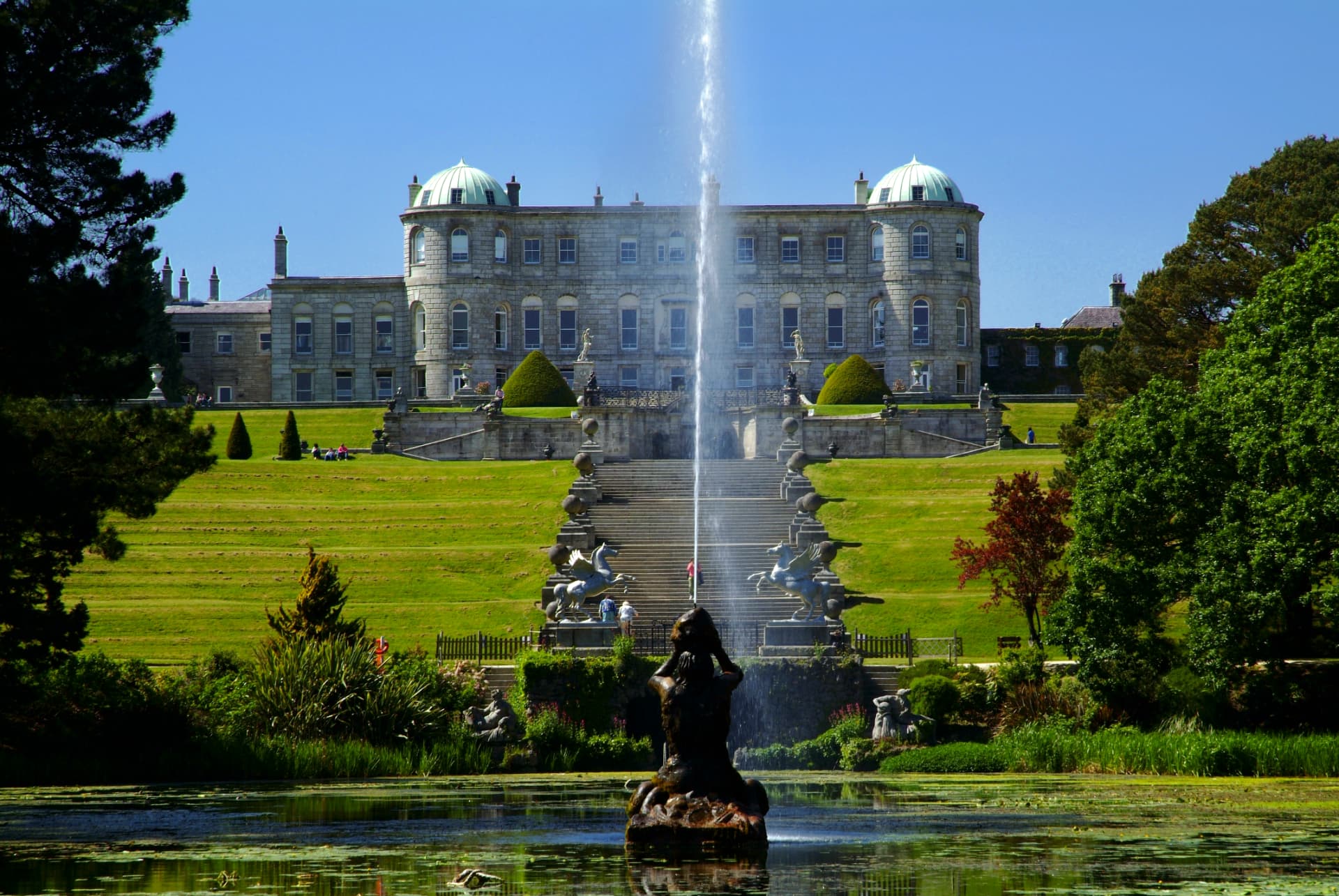
Powerscourt is really two attractions that charge separate admission and sit about six kilometres apart: a 47-acre formal garden around a rebuilt Palladian house in Enniskerry, and Ireland's highest waterfall in a forest park up the road. There is no combined ticket, so decide before you set off whether you want both. Most people do the gardens in a morning and the waterfall after — the right order, because the gardens fill with coach parties from late morning and the waterfall is quieter later in the day.
The estate is at Enniskerry, County Wicklow, about 20 kilometres south of Dublin city centre — 35 to 45 minutes by car via the N11. It is owned and run by the Slazenger family, and the gardens open seven days a week.
Eight Hundred Years on One Hillside
The story begins in the 13th century, when the Anglo-Norman de Paor family — anglicised to Power, giving the place its name — built a defensive castle to control the Dargle, Glencree and Glencullen rivers. By the end of the 14th century the O'Tooles held it, and it stayed in Irish hands until 1540, when Turlough O'Toole made peace with the Crown. The three-storey house that stands now is the work of the German architect Richard Cassels, who redesigned the old castle into a Palladian mansion between 1731 and 1741 — the same Cassels who designed Leinster House. It had at least 68 rooms, an entrance hall 18 metres long, and a mile-long avenue of beech trees leading to the door.
In 1974, days after a major restoration was completed, a fire tore through the house and gutted it. It stood as a ruin for over twenty years before reopening in 1996 — not to its original Georgian grandeur, but as a shell holding shops, a café and a museum. The gardens, laid out in the 1840s under the direction of Daniel Robertson and refined over the next 150 years by the Wingfield family and their head gardeners, survived the fire intact and are the real reason most people come.
The Gardens, Section by Section
The formal gardens step down a hillside from the house toward Triton Lake, with the Great Sugar Loaf framed dead centre at the end of the main axis. National Geographic voted them the third best gardens in the world in 2014, and the composition earns it: everything is arranged to draw your eye toward the valley and the mountains. The Italian Garden is the headline — broad terraces, bronze figures, ancient urns, and the circular Triton Lake with its winged-horse fountain at the base. The Japanese Garden has pagodas and maples. The Walled Garden carries herbaceous borders and a rose garden. Tower Valley leads to the Pepperpot Tower, which children climb and pose beside the cannons. There is a Pet Cemetery with heartfelt tombstones — names like "Mrs Mare" and "Little Bots" — and over 200 varieties of trees, including Ireland's tallest Douglas Fir and giant redwoods planted after 1860.
Inside the house, the Avoca Terrace Café serves artisan Irish food with panoramic garden views, and there are boutique shops showcasing Irish design, a Garden Pavilion selling plants, and Tara's Palace Museum of Childhood, featuring one of the world's finest dollhouses. An audio guide and introductory video cover the estate's 800-year history. The estate also runs two golf courses, a distillery offering whiskey tastings, and the five-star Powerscourt Hotel on the wider grounds.
The Waterfall, Six Kilometres Away
Powerscourt Waterfall is Ireland's highest at 121 metres (398 feet), where the River Dargle drops down a sheer rock face at the edge of the Wicklow Mountains National Park. It is a separate site with separate admission, six kilometres south of the gardens. The parkland at the base is planted with beech, oak, larch and pine — some over 200 years old — plus the giant redwoods. Sika deer, introduced to Ireland in 1858, roam the woods, and there are chaffinches, cuckoos, ravens and willow warblers. There is a playground, a picnic area, a refreshment kiosk open daily from June to August and at weekends year-round weather permitting, toilets and ample parking. The viewing area is paved and accessible.
What It Costs and When to Come
Gardens admission is €14.00 adult, €12.00 senior, €10.50 student, €5.50 for under-16s, and free for under-5s; a family ticket (two adults and three children) is €34.00. The waterfall is separate: €7.00 adult, €3.50 senior and student, €3.50 under-16, free under-2, family €19.50. There is no combined ticket. Parking is free at both sites, including EV charging in the main car park.
The gardens open daily 9:30am to 5:30pm, last entry 5pm. The waterfall opens 9:30am to 7pm in summer and 10:30am to 4pm in winter. Allow two to three hours for the gardens and an hour for the waterfall — a half-day for both. The best move is to arrive at the gardens for opening, before the coach tours, and head to the waterfall in the late afternoon when it is quieter. May and June bring the rhododendrons; September and October bring the autumn colour. Enniskerry village is worth a stop on the way out — a pretty square, a few pubs and cafés, and the kind of Wicklow village that makes you slow down without trying.
The Bottom Line
Powerscourt is the easiest serious garden day trip from Dublin — 45 minutes in the car, a Palladian house with 800 years behind it, 47 acres of designed landscape voted among the finest in the world, and a 121-metre waterfall six kilometres down the road if you want more. The mistake people make is treating it as a photo stop: walk the terraces properly, sit on the wall above Triton Lake and look at the Sugar Loaf, then drive up to the waterfall and stay an hour. Come in the morning, buy the garden ticket, and add the waterfall if you have the time. It is the difference between ticking Powerscourt and actually seeing it.