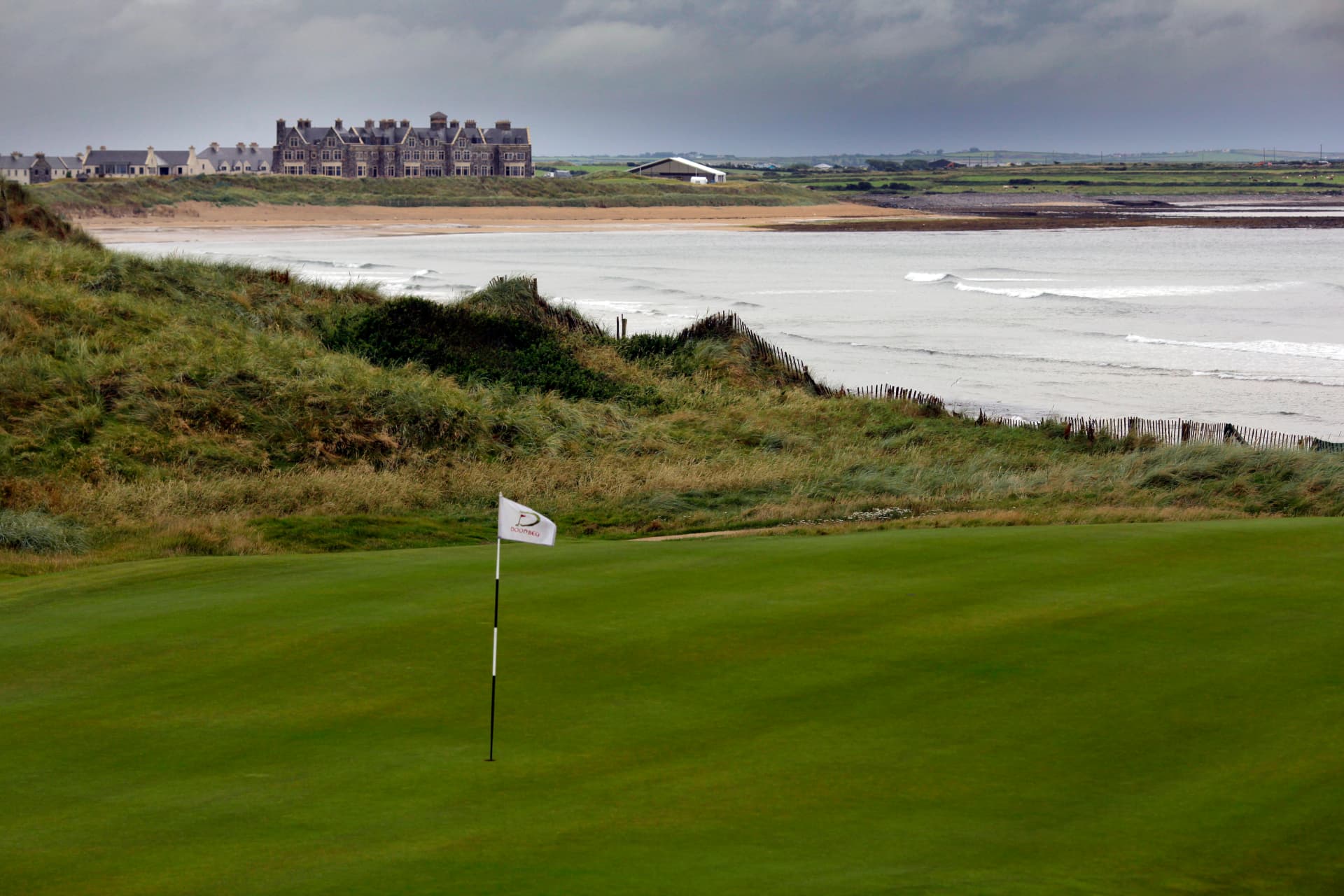
When the Amgen Irish Open arrives in Doonbeg this September, it brings with it one of the most reliable patterns in Irish sports tourism: a single week of elite golf translating into a measurable, sustained boost for the accommodation, hospitality and tourism businesses of the host county. County Clare has seen this pattern before, and the scale of preparation already under way in west Clare suggests this edition may exceed it.
A tournament with 98 years of host venues
The Irish Open dates back to 1927, when it was first played at Portmarnock Golf Club in Dublin — a course that has since hosted the event a remarkable 19 times, more than any other venue in the tournament's history. Over nearly a century, the Open has been staged at more than 20 different courses across the island, including five visits to Royal County Down, four to Royal Portrush's Dunluce Links, five to Mount Juliet, and two to Adare Manor. For two decades between 1991 and 2011, the tournament rarely strayed from a small handful of links courses — Ballybunion in 2000, Portmarnock in 2003, County Louth in 2004 and 2009 — before a deliberate strategic shift saw the European Tour begin rotating the event to a wider spread of headline links venues, starting with a record-breaking Royal Portrush staging in 2012.
Doonbeg's selection continues that pattern and represents the first time the tournament has been staged at a Trump-owned venue anywhere in the world, arriving after DP World Tour organisers spent recent weeks contacting local tourism businesses directly, in some cases seeking to book entire hotels for the tournament period.
What happened last time Clare hosted
The clearest comparison for what Doonbeg can expect is the tournament's last visit to County Clare, when Lahinch Golf Club hosted the 2019 Dubai Duty Free Irish Open. That event drew more than 100,000 visitors to the region, brought 27 of the world's top 50 ranked golfers to the club's historic links, and delivered a global broadcast reach that Clare County Council later credited with generating what it described as significant economic, social and media impact for the county.
The financial legacy at Lahinch itself was dramatic and well documented. In the year immediately following its Irish Open hosting, Lahinch Golf Club recorded a 300% increase in green fee revenue — rising from approximately €1 million in 2021 to just over €3 million in 2022 — with total club revenue up 93% to €4.94 million that year, green fees alone accounting for more than three-quarters of that income. While some of that surge reflected broader pent-up post-pandemic travel demand, the club's own leadership pointed directly to the enduring pull of the 2019 tournament broadcast — aerial drone footage of the Atlantic coastline and Lahinch's distinctive stone walls credited with driving bookings for years afterward. Clare County Council Chief Executive Gordon Daly has said the 2019 event "demonstrated the capacity of Clare to host major international events," calling Doonbeg's selection for 2026 "a testament to the strength of our local partnerships and the appeal of our county's natural and cultural assets."
The scale expected this September
Early indicators suggest 2026 may match or exceed the Lahinch benchmark. Roughly 75,000 fans are expected to purchase tickets for tournament week alone, arriving on top of Clare's normal September tourism trade. Accommodation across the county and the wider mid-west region was already reported fully booked weeks ahead of the tournament, with travel operators advising golf travellers that the closest available rooms may now require journeys of up to an hour from the course itself. Cassidy Travel, one of the operators packaging tournament travel, has advised clients directly that accommodation in County Clare is limited due to the volume of demand generated by the event.
What the tournament brings to the region
Golf tourism generates more than €300 million annually for the Irish economy, according to Golf Ireland data, with industry analysis showing that for every €1 of direct gross value added created by the golf sector, a further €0.47 is generated in indirect economic impact across surrounding hospitality, retail and transport businesses — a multiplier effect regional tourism bodies actively factor into how these events are valued. Trump International Hotel and Golf Links Managing Director Joe Russell has put the average economic impact of hosting the tournament at €16 million across the two years of preparation and delivery, while local business leaders cited in recent reporting have estimated tournament week alone could be worth over €20 million to the West Clare region specifically. Clare Chamber of Commerce has separately projected the event could deliver "tens of millions of euro" in visitor spend to the county.
The $6 million prize fund tournament runs 10–13 September, preceded by a Pro-Am on 9 September, and has increasingly taken on a festival character in recent editions — this year featuring Irish band Keywest headlining a live mainstage alongside daily entertainment zones and food trucks, a format organisers credit with growing the tournament's under-30 audience. General admission tickets range from €35 for the Pro-Am to €65 for the final round, with premium hospitality packages, including the Green on 18 experience overlooking the 18th green, priced from €549 per person — pricing that reflects strong anticipated demand across every ticket tier.
A brief note on ownership and added attention
Trump International Golf Links & Hotel is owned by Donald Trump, and the President is expected to attend the tournament's final two days, 12–13 September, having previously visited the resort during a 2023 round and a 2019 state visit. His attendance is expected to intensify an already significant accommodation squeeze — with his travelling delegation potentially numbering close to 1,000 people, including a Secret Service security detail reported at up to 200 officers — while bringing a further wave of international media attention to the region beyond what the golf alone would generate. Irish security costs for the visit have been estimated at approximately €20 million.
What local businesses stand to gain
For hospitality and tourism operators across Doonbeg, Kilkee, Lahinch and the wider West Clare area, the pattern established in 2019 points to benefits that extend well beyond tournament week itself: immediate accommodation and food and beverage revenue during the event, followed by a longer broadcast-driven visibility effect that continued lifting green fee and visitor numbers at Lahinch for several years afterward. Local business owners in Doonbeg have been reported as welcoming the scale of the economic boost even as accommodation providers across the wider region work to absorb unprecedented short-term demand.
What This Could Mean for Ireland
Doonbeg's tournament offers a live case study in how a single week of televised sport can concentrate meaningful tourism investment into a small rural region, with knock-on visibility benefits for the wider Wild Atlantic Way that can outlast the event itself by years, as the Lahinch precedent shows. For tourism operators elsewhere in Ireland watching this pattern, it reinforces the growing role major sporting events play in regional tourism strategy beyond the traditional visitor season.
The Bottom Line
County Clare's tourism sector has direct, verifiable precedent for what an Irish Open hosting delivers — a nine-figure regional visitor swell, sustained accommodation demand, and a green-fee revenue effect at the host course that outlasted the tournament itself by years at Lahinch. With ticket demand, accommodation bookings and hospitality interest already running high weeks ahead of the September event, West Clare's tourism operators appear positioned for a comparable, and potentially larger, benefit this time around.